
There are two ways to represent information: analog and digital.
Before the digital revolution, information was primarily stored and transmitted in analog forms. Analog technology, like vinyl records for music or film cameras for photos, captures and processes data in continuous signals. For example, a vinyl record captures sound waves as physical grooves on a spinning disc, while a film camera records images as continuous variations in light. A painting is also an example of an analog system because the number of possible color combinations is infinite.
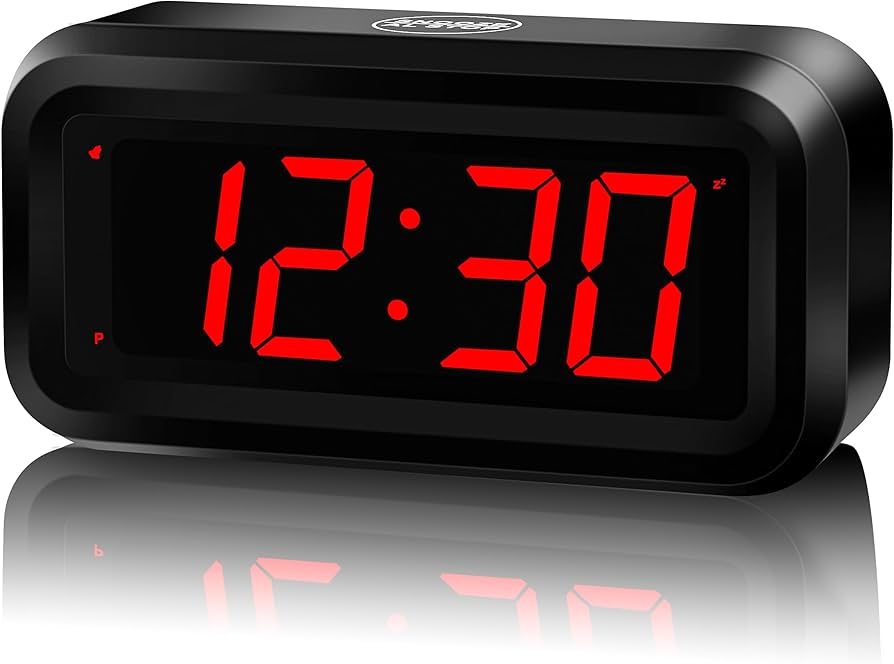
Analog systems use smooth, continuous signals to represent information, such as a vinyl record’s varying grooves or a thermometer’s mercury level, which can have an infinite range of values. In contrast, digital systems use discrete signals to handle information, like the precise pixels in a digital photo or the numbers on a digital clock. While analog signals can degrade and be affected by noise, digital signals are clearer, more reliable, and easier to store and transmit without loss of quality.
Both analog and digital signals can be affected by noise, which is unwanted information that mixes with the signal and can make it difficult to differentiate what is part of the signal and what is noise. One key difference between analog and digital is that with digital signals, the signal can be separated from the noise, whereas with analog, it is more difficult to separate the signal from the noise. The reason digital signals can separate the signal from the noise, up to a point, is that digital signals display information with discrete values. A digital signal can remove and filter noise because of its discrete nature, allowing for a threshold to be set—meaning a signal above a certain level will be read as a higher discrete value, while signals below a certain level will be read as a lower discrete value. In contrast, analog signals are continuous, making them more susceptible to noise because the information cannot be easily separated from it or filtered. In analog systems, such as traditional phones, noise electrons appear the same as signal electrons, making it impossible to differentiate between the signal and the noise.
Being digital means that information is stored, processed, and transmitted as numbers rather than physical or continuous signals. This makes it easy to copy, share, and manipulate data, functioning as a super-efficient way to handle all sorts of information in our modern world.
Digital technology has largely replaced analog technology due to its many advantages. One key advantage is its noise resistance; digital technology can separate the signal from the noise when representing information because it is discrete, while continuous analog systems cannot. Additionally, digital signals can be compressed and processed more efficiently. Lastly, digital copies maintain their original quality, while analog copies degrade over time. An example of this is Rembrandt’s “Night Watch,” a famous painting which could have faded and changed color over time because it is analog.
Due to the advantages of digital technology, it has largely supplanted analog technology. In the 2000s, digital technology became even more pervasive as smartphones, tablets, and other digital devices became common, integrating digital technology into daily life. On June 12, 2009, the Federal Communications Commission (FCC) mandated that all television stations must switch from analog to digital. Streaming services replaced physical media for music and video, and digital formats became the standard for almost all types of media.
The shift from analog to digital has transformed how we create, store, and share information, leading to a more interconnected and efficient world.
This post was created using the ChatGPT 4o Mine responses from the following prompts. ChatGPT’s responses were edited to remove incorrect, misleading, or irrelevant information.
Prompt: Explain the essence of what it means to be digital, assume that you are talking to a tenth grade student.
ChatGPT said:
Sure! Imagine your smartphone, computer, or even your video game console. All these devices work with digital information. But what does “digital” really mean?
At its core, “digital” refers to information that is represented using numbers, specifically binary numbers, which are just 0s and 1s. This is different from “analog,” which is like the way old-fashioned record players work by physically moving a needle along a groove to produce sound.
So, think of digital information like a giant puzzle made up of tiny, simple pieces (0s and 1s). Each piece can be put together in countless ways to create complex things, like images, videos, or text. When you text a friend, play a game, or watch a video online, you’re interacting with digital information.
Being digital means that things are stored, processed, and transmitted as numbers rather than physical or continuous signals. This makes it easy to copy, share, and manipulate data. It’s like having a super-efficient way to handle all sorts of information in our modern world.
In short, being digital means using numbers to represent and work with information, making it easier to store, process, and share in our tech-driven lives.
Fact Check: ChatGPT responds that digital information is represented with specifically binary numbers, “which are just 0s and 1s.” However, this is false information, and being digital is not limited to binary numbers.
Prompt: Re-explain without talking about binary code.
ChatGPT said:
Analog systems use smooth, continuous signals to represent information, like a vinyl record’s varying grooves or a thermometer’s mercury level, which can have an infinite range of values. In contrast, digital systems use discrete signals to handle information, like the precise pixels in a digital photo or the numbers on a digital clock. While analog signals can degrade and be affected by noise, digital signals are clearer, more reliable, and easier to store and transmit without loss of quality.
Prompt: Explain the history of the change from analog to digital
ChatGPT said:
The shift from analog to digital technology is a major evolution in how we handle information, and it has unfolded over several decades.
1. Early Analog Era: Before the digital revolution, information was primarily stored and transmitted in analog forms. Analog technology, like vinyl records for music or film cameras for photos, captures and processes data in continuous signals. For example, a vinyl record captures sound waves as physical grooves on a spinning disc, while a film camera records images as continuous variations in light.
2. The Rise of Digital Technology (1960s-1980s): The journey to digital began in the mid-20th century with the development of early computers and digital electronics. Key innovations included the creation of the transistor in the 1940s, which replaced bulky vacuum tubes and allowed for more compact and reliable electronic devices. By the 1960s and 1970s, digital computers were becoming more powerful, and engineers started to develop digital communication methods, like the digital signal processing used in telephones and early data networks.
3. Digital Revolution (1980s-1990s): The 1980s and 1990s saw a rapid expansion of digital technology. Personal computers became widely available, and digital storage media like CDs began to replace analog formats like cassette tapes and vinyl records. Digital cameras emerged, replacing film cameras with electronic sensors. The development of the internet during this time further accelerated the shift to digital, as it allowed for the easy sharing and transfer of digital information across the globe.
4. Ubiquity of Digital Technology (2000s-Present): In the 2000s, digital technology became even more pervasive. Smartphones, tablets, and other digital devices became common, integrating digital technology into daily life. Streaming services replaced physical media for music and video, and digital formats became the standard for almost all types of media. Advances in digital technology have continued, leading to innovations like cloud computing, artificial intelligence, and the Internet of Things (IoT), where everyday objects are connected and communicate using digital technology.
The shift from analog to digital has transformed how we create, store, and share information, leading to a more interconnected and efficient world.
Prompt: What is the advantage of digital technology over analog technology.
ChatGPT 4o said:
Digital technology offers several advantages over analog technology:
1. Precision and Accuracy: Digital signals can represent data more accurately, leading to less noise and distortion. This results in clearer audio and video quality.
2. Storage and Processing: Digital data can be easily stored, retrieved, and processed. It requires less physical space and can be compressed without significant loss of quality.
3. Reproducibility: Digital copies maintain the original quality, while analog copies degrade over time.
4. Flexibility: Digital systems can be easily modified and upgraded. Software updates can improve functionality without needing hardware changes.
5. Integration: Digital technology enables seamless integration with computers and the internet, enhancing connectivity and functionality.
6. Data Manipulation: Digital data can be easily manipulated, allowing for advanced editing and processing capabilities that are more complex in analog formats.
7. Error Correction: Digital systems can incorporate error detection and correction algorithms, enhancing reliability in data transmission.
Overall, digital technology provides greater efficiency, quality, and versatility in many applications.